Our daily bread

If you grew up in a Catholic household like mine, you probably learned the entire Our Father long before you could even spell your own name.

The Our Father is a prayer I have recited a few million times in my life and counting. While I have always revered it as the words Jesus gave us, I found myself drawn into the prayer anew today.

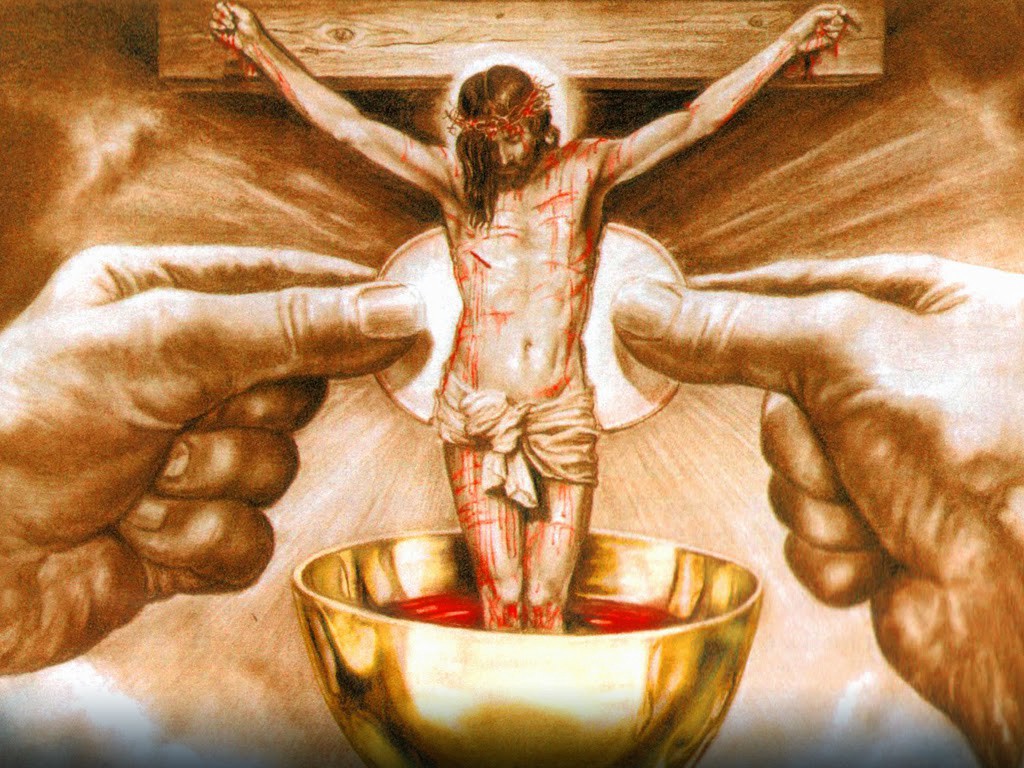
“Give us this day our daily bread.” I have generally read and recited these words quite literally. Jesus invites us to ask God to provide nourishment for our physical bodies. What if we venture to go a bit deeper here and posit that we are asking God to nourish our souls as well with the “bread sent down from heaven”? What if, in fact, we are asking the Father for physical and spiritual nourishment.

He gave us His son, Jesus, with the intention of Him providing His people with “living bread” in which, once eaten, we would never hunger.

Today, I realized the depth of this beloved prayer. I thank God for His gently nudge, inviting me to venture deeper into His words.

May Jesus, “the living bread come down from Heaven,” fill you this day with all your soul is longing for.

Blessings to You and Yours!

Bread of Life

We read from John’s Gospel this week Ch. 6 verses 22-59. Jesus refers to Himself over and over again as The Bread of Life sent from the Father to give eternal life to those who believe. But what did He mean by referring to Himself as bread?

First, Jesus meant to mention Himself as sustenance quite literally. “For my flesh is true food, and my blood is true drink.” JN 6:55. The Jewish people were confounded by this statement. How could they be expected to eat the flesh of Jesus and to drink of his blood and yet all they needed to do was to be reminded of the Passover celebration of their ancestors. Did they not feast on the meat of the sacrificial lamb in Egypt? They literally consumed the meat of the unblemished lamb they sacrificed to God.

Jesus, though blameless and without sin, was made a sacrifice to God for the forgiveness of sins. Jesus declared to his disciples at the last supper, “This is my body, which will be given for you, do this in memory of me.” Luke 22:19. Here Jesus alludes to His sacrificial offering to God for the sake of mankind. He then commands them to continue this breaking of bread in memory of Him.

Enter the Eucharist.

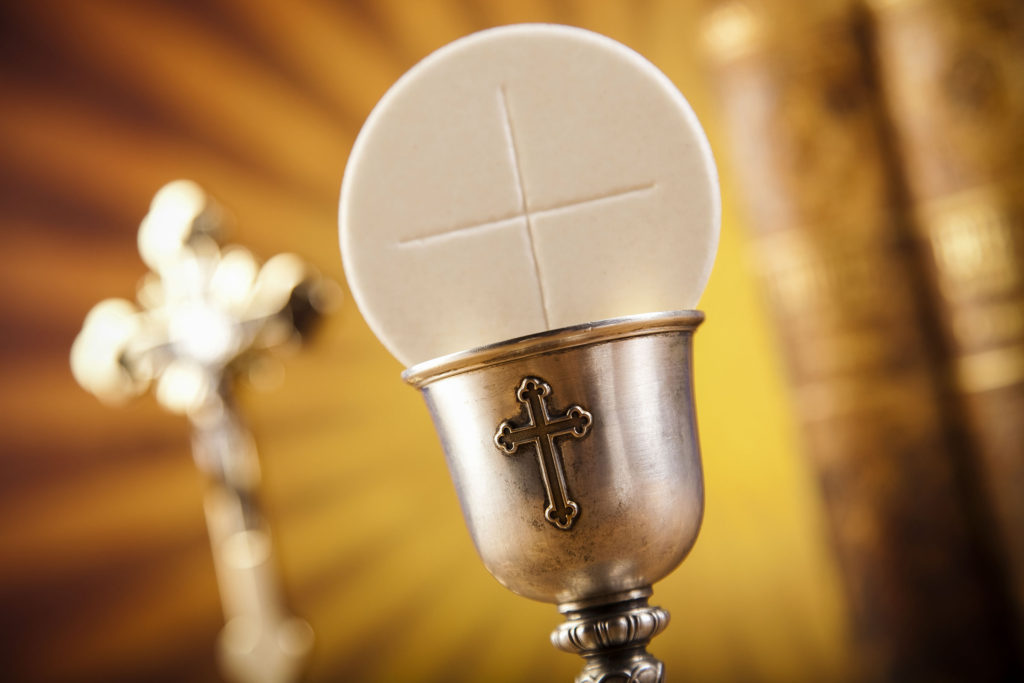
At each Mass we participate in, the sacrifice of Jesus is made to the Father by means of the priest at the altar. In receiving Holy Communion, we are taking in that which cements our relationship with God, the body and blood of Jesus, hidden beneath the appearance of bread and wine.

Second, Jesus tells us “I am the bread of life, whoever comes to me will never hunger.” JN 6:30-35. Does this mean that as followers of Jesus we will never feel physical hunger? Of course not. Jesus was speaking of that spiritual hunger which we all have, given to us at birth, that drives us to search for fulfillment. Our modern culture tries to convince us that our internal voids can be filled with material things or sinful overindulgence. As followers of Christ we know differently.

By receiving Jesus in the Eucharist, we fill our souls with God! There is nothing to compare or equate. The intimacy we are afforded in that close encounter with our God came at a price, and that was the sacrifice made by Jesus on the cross. There is no greater act of love than this. It is when we receive our Lord in the Eucharist that we are filled with His Divine Grace enabling our spirits to be satiated with what we truly need.

Some of the happiest people on earth are those individuals who attend daily Mass. In receiving Jesus daily, they feel better equipped to handle the many demands and hardships of everyday life. Why is this? Their spirits are being properly nourished with their true life source. Praise be to God!

Lastly, “No one can come to me unless the Father who sent me draw Him, and I will raise him on the last day.” JN 6:44-51. Jesus assures us of the reward to be had by believing in Him and accepting His sacrifice as our salvation. Besides giving us His grace in the Eucharist, and promising to be with us in our temporal lives, He tells us in no uncertain terms that we will spend eternity in the presence of God.

Three weeks after Easter, we pause to reflect on the gravity of Jesus’s sacrifice. We ponder the deep love our God has for us as made evident through His son Jesus Christ. How does this knowledge of God’s desire to be with us impact our daily lives? Perhaps the readings of the past week have stirred our spirits and inspired us to better appreciate the gift of the Eucharist.

For those of us having to endure being cut-off from the sacrament during the pandemic, may we value the Eucharist that much more when the ban is lifted. In the meantime, continue to ask for Jesus to come into your life via a spiritual communion. You may even consider reciting The Stations of the Cross or The Chaplet of Divine Mercy as a personal devotion.

May we always respond with gratitude to the generosity of God, best displayed in the crucified sacrifice of His son. May we always cherish the Eucharist and never take it for granted.

Blessings to You and Yours!

Emmaus

Were not all the disciples incredibly relatable? Jesus handpicked followers that represented the average people of the day. By design, some two thousand years later, we see ourselves and our neighbors so accurately depicted.

Scripture tells us that two of Jesus’s disciples, three days after His death, went on a journey several miles from Jerusalem (Lk 24:13-25). On their way they began to discuss the events of the past few days with an apparent stranger they encountered. They are unaware that this fellow traveller is indeed Jesus. This “stranger” ministers to them as they walk on and discusses all the prophetic references of His death and resurrection that appeared in their sacred books.

For these two disciples this was their first encounter with the risen Lord. We wonder when reading this how they could have missed the fact that Jesus was physically present alongside them. Perhaps Jesus chose to appear physically different than He was. Surely, His profound extrapolation of scripture would have made them wonder who this stranger was. And yet, they completely miss it.

How often have we come upon a stranger and failed to see Jesus within that person? Have we allowed our own prejudices and judgments to cloud our perceptions and in so doing missed an opportunity to experience God?

In Luke’s Gospel, we are told that the disciples invite Jesus to stay with them and dine as night was fast-approaching. It’s then that Jesus takes bread, blesses it, breaks it, and reveals himself to them. No sooner do the disciples realize the Lord that “he vanished from their sight.” In their shock the disciples question one another, “were not our hearts burning within us while He spoke to us on the way and opened the Scriptures to us?”

Do you find yourself relating to these disciples yet? Jesus journeyed alongside them the entire day and they could not see Him. While Jesus disguised His appearance, His ministering on the scriptures should have been enough for them to recognize the Lord.

How often do we fail to see Jesus when He is in plain sight. How often we cannot see Him in the faces of our neighbors, friends and families. Think of the many times we have neglected to see Him in the faces of the elderly, sick, imprisoned, unemployed, migrant, homeless, etc. What of the times we could not recognize Him through the ministering of His elected officials within the church, especially the Pope. The things of our natural world resound the magnificence of Jesus and yet we rush through our lives rarely pausing to take in a radiant sunset or beautifully lit night sky.

The disciples do not fully recognize Jesus until the breaking of bread. Not until He repeats the actions of the last supper is the veil lifted from their eyes. Luke’s Gospel tells us that once they make the connection, Jesus disappears. They must have been shell-shocked. Had they really been in the physical presence of the Lord the entire day? Was that not the proof they needed to assure them of the truth of the resurrection? The statement they utter is so beautiful, “were our hearts not burning.” That kind of reaction to an encounter with God is so humanly genuine, giving us another chance to see ourselves in the reaction of the disciples.

If you have ever encountered Christ at any time on your journey of life, you should be able to attest to the acclamation of your “heart burning.” The Lord wants that type of reaction for us as a way of connecting with us. An experience such as this becomes a part of who we are as only a strong emotional connection can. Think of the first time you fell in love or the first time you held your newborn child. Those emotions were so strong that they withstand the test of time.

The disciples would never forget the way in which Jesus ministered to them just three days after His death. Every time we attend Mass and the priest consecrates the bread and wine Jesus again reveals Himself to us, His disciples. When we partake of the bread and wine, Jesus chooses to stay with us physically for a few brief moments. Do we respond with awe and wonder as the disciples did? Or do we fail to recognize Jesus? Are we going through the motions, more interested in watching people process up the aisle or read the church bulletin? In what way do we respond to that intimate encounter with Jesus?

We are Jesus’s disciples and as such we are to follow Him. He speaks to us every time we read the scriptures. Are we listening? Do we make the time to read the word of God? Believing the word of Jesus that we are all made in the image and likeness of God, do we see God present in those we live with and encounter each day?

Jesus gave us the sacraments and His church as a means of staying close to His disciples. May the word of God encountered through the ministry of the church serve to enkindle the fire of our own hearts. A fire emblazoned by the word of God made flesh and that we are privileged to receive in the Eucharist.

Adopt the practice of daily scripture reading and reflection. Ask God what He wants to tell you each day. You will find that all too soon your own spirit will come alive with zeal for the living word of God, Jesus Christ.

Blessings to You and Yours!
Loss

Loss is never easy. Loss always challenges us. It challenges our will power to overcome devastation. It challenges our resolve to rise from the ashes victorious. It challenges our belief system and values, often ushering in those crippling, defeatist questions, “Where is God?” “Does he care about me?”

As our world continues to labor under the birthing pains of this pandemic, we realize that we are surrounded by loss. Loss of finances and job security, loss of world trade and economy, loss of friends, family, and neighbors as inevitably individuals succumb to the illness. Loss of our freedoms to come and go as we please, loss of social contacts and family gatherings. Loss of communal fellowship in our churches, and loss of the sacraments.

And while all of these have the potential to shake us to our very core, none are more devastating than the loss of God in our lives.

We have now entered into the octave of Easter. We will begin to explore the Acts of the Apostles as well as the Gospels, which will serve to highlight the aftermath of the resurrection. Our readings from the past few days, coming from St. John and St. Matthew’s gospels, tell of the women coming to the empty tomb of Jesus. We read of the dialogue between the angels and the women followed by the dialogue between Jesus and Mary Magdalene.

Mary Magdalene is “weeping at the tomb.” The disciples are huddled in the upper room completely paralyzed by their own fears. The loss of Jesus in the lives of his friends and followers threatened to destroy them and in effect all that Jesus had established during His ministry. The disciples lost their conviction, their zeal. They lost their purpose and their drive. In losing Jesus they lost themselves and were uncertain how to continue living. How could they be expected to return to a level or normalcy after what had happened, after what they had been through?

Sound familiar?

Jesus went before them, telling Mary Magdalene that He will be waiting for the disciples in Galilee. This message serves to provide hope. Hope that they would get through this difficult time. The prospect of being reunited with Jesus served to give their lives meaning.

Are we any different? We are the body of Christ. Jesus wants us to know that He is with us in our losses. He is with us even when we cannot be with Him in the Holy Mass. He reminds us that He goes before us always, preparing a place for us. If we keep our hearts fixed on Him we will be able to bear all our current hardships all the better.

This journey of the past few months has caught us all off guard. a truly unprecedented time for our modern world. The Easter octave takes on a greater meaning for us this year. The gospels are serving to remind us that we will never be forsaken. God the father gave us His son as proof of this. Let us do ourselves a favor and not lose the relevance of this reality.

May the difficulties we face during this time serve to bring us closer to God, not further from Him. May we remain faithful disciples unafraid to face the challenges that lie before us. May we rely on the Holy Spirit to provide us with the courage and conviction to persist on our journey, always in step with our Lord, never straying from His side.

Lenten Reflection Day 39

“You are what you eat.”

Today we celebrate the institution of the Eucharist. Jesus breaking bread with His disciples explaining to them that He is the bread of Life. Those who eat of this bread will never die. He instructs them to continue this sacred meal in remembrance of Him.

Our Catholic faith professes the transubstantiation. Jesus is sacrificed on the altars of our churches at every Mass, and at every Mass we are invited back to that solemn last meal of Jesus with His disciples. For us, it is more than bread and wine. We receive Jesus’s body, blood, soul and divinity in the exact way He intended, and in the manner shared with His disciples this day more than two-thousand years ago.

We, as partakers of Jesus’s body and blood, have the unique privilege of receiving the Lord intimately within ourselves. When received properly, we are giving God the chance to transform us by this encounter with Him. To heal us and to empower us to continue on our journey to Heaven. When we receive our Lord in communion we become that which we take in, the Body of Christ.

Blessings to You and Yours!

Lenten Reflection Day 38

“I was wrong.” “My mistake.” “I should not have done or said that.” Are you a person who can easily admit a personal fault or failure? Do you often times find yourself making excuses for why you said or did something? If I’m being honest then I’d have to admit I fall into the latter category. Not all the time, but sometimes. It’s not easy quieting that little devil sitting on our shoulder who loves to whisper all kinds of sinful suggestions in our ear.

Hopefully this Lent has allowed you extra time to reflect upon growing closer to God. Perhaps you were encouraged by a friend, loved one, or pastor to seek out the sacrament of reconciliation BEFORE we were all quarantined! There’s no better way to start returning to the Lord then by asking for His forgiveness first. He meets us in the confessional with open arms. Instead of scolding retribution, He pours out His sanctifying grace, a homing device, if you will, that helps Him to follow us closely so that we are never too far from His help, love, and grace.

While most of us will not be able to attend Mass on Easter Sunday, or receive communion this year, we can still make every effort to prepare our souls to receive Jesus in whatever way we are able, including a spiritual communion. Examining our conscience is the way we can prepare. If it’s been awhile, don’t fret, the internet is filled with various forms of this exercise. Several religious orders such as the Franciscans and Benedictines have a version, handed down by their saintly founders. The United States Catholic Conference of Bishops has a few they publish on their website.

Saints Padre Pio and Sister Faustina also have guides as well. Browse through until you find one you like and then prayerfully do some interior reflection. Most priests are conducting the sacrament of reconciliation by appointment. If you are unable to schedule a time, then continue with the examination of conscience anyway. You can begin preparing yourself for whenever the time comes. Just as we are now making spiritual communions, you may make a spiritual confession of sorts, asking God for His mercy and His help to stay away from sin.

“In the life of the body a man is sometimes sick, and unless he takes medicine, he will die. Even so in the spiritual life a man is sick on account of sin. For that reason he needs medicine so that he may be restored to health; and this grace is bestowed in the sacrament of penance.” St. Thomas Aquinas.

Blessings to You and Yours!

Lenten Reflection Day 37

“Go with the angels.” This is how my favorite virtual priest closes out our prayer sessions every so often. I say virtual, but he is a real person, a Vincentian priest, who happens to have a daily prayer podcast. The podcast is called The God Minute and it is awesome. I highly recommend it if you are looking for a new way to pray.

This closing prayer I always find so surreal. The reminder we are in the presence of angels everyday is both encouraging and reassuring.

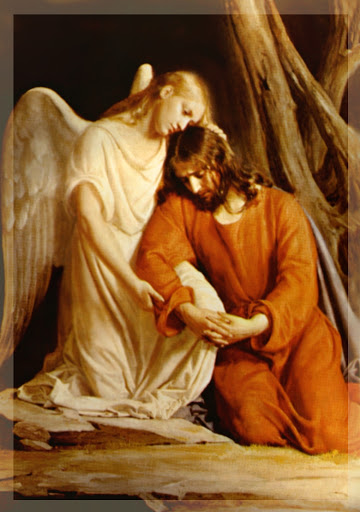
Angels are present throughout all of scripture. They served as messengers of God, warriors, and comforters. We are told in Luke’s Gospel that Jesus, knowing that His hour was at hand, wept bitterly and was in agony. Luke tells us that an angel was sent to Him. “Father, if you are willing, take this cup away from me; still, not my will but yours be done.” And to strengthen him an angel from heaven appeared to him.” Luke 22:42-43.

If the veil between Heaven and earth could be lifted, I imagine angels would have been visible alongside Jesus through his entire Passion, offering him encouragement and strength to follow through with God’s plan.

I believe that’s what we are being commissioned to do. To “go with the angels” is asking us to join them in offering encouragement and strength to one another in our times of trial. To bear God’s message of hope and love to others when they need it the most.


Blessings to You and Yours!

Lenten Reflection Day 36

The resurrection of Jesus is meaningful to us on many levels. One of those being a great symbol of hope.

The Israelites had been waiting for God’s answer to their longing for salvation. Long had they kept watch in search of the messiah. Jesus was not at all what they expected and yet the miracles He worked, His teachings, and His knowledge of the Jewish law became for many devout Jews the obvious answer of God. Jesus was the physical embodiment of all they had hoped for. How joyous they must have felt being in His presence. His death challenged their belief in Him until His blessed resurrection was made known. This had to cement for them the certainty of their own resurrection, which in itself would give hope of an eternity shared with God.

We, as followers of Jesus, are able to share in this excitement of the promise of our own resurrection. Jesus was able to conquer death and in so doing open up the gates of Heaven. We are assured that if we live our lives according to the laws of God we too will experience eternity with Him. This hope in an eternity spent in Heaven enables us to persevere each day in living holy lives. The hope of eternal happiness fuels our commitment in following the laws of God. The hope of sharing an eternity with our loved ones motivates us to help others to follow the ways of God.

Hope as it turns out is a great catalyst for salvation.

This Holy Week let us be filled with hope. Hope in our own resurrections at the end of our earthly lives, hope that God’s people around the world will be moved to a deeper love of Him, hope that our world will heal during this pandemic, and that people will return to God in resounding numbers. Hope for an end to suffering, violence, poverty, suffering, and injustice.

We are people of hope, emboldened by the resurrection. May we spend this week thanking God for His tremendous gift of hope and to be with us on our faith journeys.

May He help restore our ability to hope in Him.

Blessings to You and Yours!

Lenten Reflection Day 35

Palm Sunday
We read The Passion narrative today from Matthew’s Gospel 26: 14-27:66. There are so many moving pieces to this story. I really felt drawn to two subjects in particular: Peter and Jesus.


Peter certainly seems to represent strength throughout Jesus’s ministry. We see Peter transform from the average Joe to the keeper of the keys.
He has his faith tested when he steps out of the safety of the boat and into the sea, he is the first to declare Jesus “the Christ”, and he assures Jesus at the last supper of his fidelity in Him.


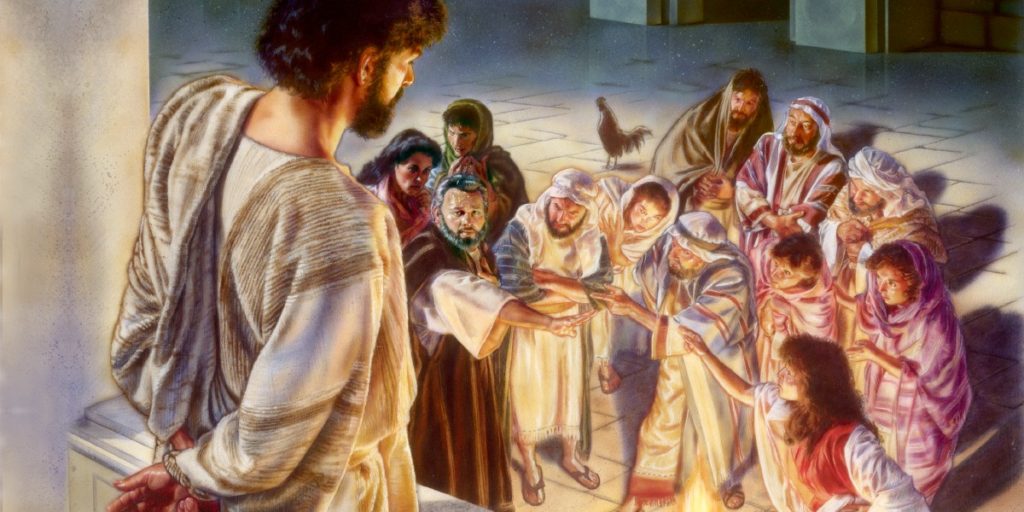
We know that Jesus is fond of him and that He entrusts him to not only lead the church on earth, but to be the literal gate keeper of Heaven. Even as we know these things we see Peter’s humanity revealed in our gospel. He is selected to accompany Jesus in the garden of Gethsemane, and he cannot stay awake, he is quick to react in violence when the guards come to take Jesus away, and he assures Jesus that he would never betray Him and then he denies knowing Him three times.


I find myself identifying with Peter. How often I am convinced of my commitment to God until something goes wrong or I feel threatened. I think of how many times I have denied knowing Christ when it wasn’t convenient, or because I was worried about what someone else would think of me. I, too, have deeply regretted times when I did not measure up in the eyes of God, ashamed as Peter was, in my denial of Jesus.


The other subject of interest of course being that of Jesus. He retreated to the garden to pray, desiring to speak to God in a time of great anguish and distress. Like us, Jesus wished to be with close friends until the last hour, to have someone to share in His pain and offer support and encouragement. The disciples made for poor companions, as scripture tells us. Jesus went to them three times and each time they were fast asleep. How little solace Jesus was offered in the face of His fear and anxieties.


As Jesus faces his captors and his judges, He shows no anger and protests not. Instead He allows it all to happen, quietly accepting each insult and injury unto death. We witness his heartfelt plea in the garden for the Father to take this cross away from him and at the same time we see him surrender to whatever God demands of him.


We can certainly identify with the humanity of both Jesus and Peter. Peter made choices derived from pure emotion, not stopping to consider what God would want or expect. In contrast, Jesus acted out of pure obedience to the Father, desiring for there to be another way yet surrendering to God’s plan no matter the cost.

We are called to respond as Jesus did in the face of life’s challenges. Saying “yes” to God no matter what and not allowing our emotions to govern us. May God bless us with courage in the face of trial. We ask for His forgiveness for the times we denied Him and our calling in this life. May this Holy Week strengthen our resolve to live lives worthy of being called His disciple.


Blessings to You and Yours!

Lenten Reflection Day 34

Ordinarily my family and I would be looking forward to receiving our blessed palm branches tomorrow at Mass as we celebrated the beginning of Holy Week. This year is going to be a little different. I find myself disappointed to be missing out on this great liturgical celebration and I feel let down that I cannot be in the presence of Jesus at such a a poignant time.


Today’s scriptural selection, Ezekiel 37: 21-28, gave me some reassurance. Line 27 says, ” My dwelling shall be with them; I will be their God, and they will be my people.” God is everywhere. Jesus Christ is sacrificed on the altar every single Mass and is made physically present to us in the words of the consecration. And while the priest places Him into the tabernacle after communion, He does not stay there. Having received Jesus sacramentally we bear Him out into the world wherever we go. We are the body of Christ. “My dwelling shall be with them.” God reassures us that we are never abandoned, never too far from His loving and watchful eye.


Reflecting on this reality afforded me the realization that I don’t have to be physically in front of the altar for God to be with me. He knows I deeply desire to be with Him there but He’s reminding me, reminding us, that He cannot be contained. As receivers of the sacraments we belong to Him. As long as we desire to be close to Him, He will not abandon us. If anything, He is closer to us now more than ever as He works to console us during our time of incredible need.


Let us not give in to the anxiety and fear swirling around us right now. Let us not allow ourselves to be robbed of the joy of this season. Let us not forget the words of Jesus, “I will be with you always, even until the end of the world.” MT 28:20.

Blessings to You and Yours!